




Trade
Overview
TT Platform
Description
Task
Browser Access
Description
Task
Videos
TT Desktop
Description
Task
Videos
Reference
Workspace Windows
Description
Task
Videos
Widgets
Description
Task
Preferences
Description
Viewing Market Data
Time and Sales
Task
Reference
Description
Depth
Description
Task
Reference
Market Grid
Description
Task
Videos
Reference
Product Grid
Description
Task
Reference
Spread Matrix
Description
Task
Videos
Reference
Basic Order Entry
TT Order Types
Description
Task
Videos
Reference
Case Studies
TT Premium Order Types
Description
Task
Reference
Order Ticket
Description
Task
Use Cases
Reference
MD Trader®
Description
Task
Videos
Reference
Order Profiles
Description
Task
Reference
Routing Rules
Description
Task
Blocktrader
Description
Task
Videos
Reference
Trading Crypto on TT
Description
Task
Videos
Reference
Trading on B3
Order Management
Order Book
Description
Task
Reference
Floating Order Book
Description
Task
Reference
Fills
Description
Task
Reference
Positions
Description
Task
Reference
Orders and Fills
Description
Task
Reference
Audit Trail
Description
Task
Reference
Audit Query
Description
Task
Reference
Account List
Description
Task
Videos
Reference
Position Manager
Description
Task
Reference
Alert Manager and Alert Viewer
Description
Task
Videos
Reference
Account & User Restrictions
Description
Task
Reference
Balances
Description
Task
Reference
TT® OMS
Care Orders
Description
Task
Videos
Reference
Lock and Release
Description
Task
Bulking
Description
Task
Videos
Stitching and Splitting
Description
Task
Combining
Description
Task
Order Passing
Description
Task
Use Cases
Order Exceptions
Description
Task
Options
Options on TT
Description
Videos
Options Chain
Description
Task
Use Cases
Videos
Reference
Options Trade Monitor
Description
Task
Videos
Reference
Vol Curve Manager
Description
Task
Use Cases
Videos
Reference
Electronic Eye
Description
Task
Videos
Reference
RFQ Viewer
Description
Task
Videos
Reference
RFQ with Counterparties
Description
Task
Counterparty Manager
Description
Task
Strategy Creation
Description
Task
Use Cases
Reference
Options Risk
Description
Task
Videos
Reference
Options Risk Matrix
Description
Task
Videos
Reference
Watchlist
Description
Task
Videos
Reference
Expiration Manager
Description
Task
Volatility Calculator
Description
Task
TT Uncovered 2.0
Description
Task
TT Uncovered 3.0
Description
Task
QuikStrike
Description
Task
Spread Trading
Autospreader
Description
Task
Use Cases
Videos
Reference
Autospreader Rules
Description
Task
Videos
Reference
Hedge Manager
Description
Task
Videos
Reference
Trading in Yield
Description
Task
Use Cases
Reference
Aggregator
Description
Task
Videos
Reference
Algo Trading
Algo Dashboard
Description
Task
Videos
Reference
Template Manager
Description
Task
Order Management Algos (OMAs)
Autotrader
Description
Task
Reference
Videos
Excel integration with TT
Description
Task
Videos
Reference
Market-Making Algos
Analytics
Charts
Description
Technical Indicators
Task
Videos
Reference
Trader Analytics
Description
Task
Reference
ADL
ADL Overview
Introduction to ADL
Description
Task
Videos
Reference
ADL Basic Concepts
Description
Task
Reference
Building your first algo
Lessons
Advanced concepts
Description
Task
Case Studies
Jump blocks
Group blocks
Virtualized blocks
Library blocks
Trading Blocks
Discrete blocks
Arithmetic blocks
Basic blocks
Logic blocks
Miscellaneous blocks
Setup
Setup Overview
Getting Started
Description
Task
Videos
Reference
Supported Order Types and TIFs
Company Administration
Connections
Description
Task
Videos
Reference
Accounts
Description
Task
Videos
Use Cases
Reference
Users
Description
Task
Videos
Reference
Company
Description
Task
Reference
Order Tag Defaults
Description
Task
Account Administrators
Description
Task
TT Premium Services
Description
Task
TT Access
Description
Task
Advanced Features
Description
Risk Management
Risk Administration
Description
Task
Risk Limits
Description
Task
Videos
Reference
Pre-Trade Portfolio Risk
Description
Task
Reference
Order Cross Prevention
Description
Task
Videos
KRM Limits
Description
Task
TT® OMS
TT OMS Administration
Description
Task
Use Cases
Reference
Exchanges: Americas
B3
Description
Task
CBOE
Description
Task
Cboe FX
Description
Task
Reference
CFE
Description
Task
CME
Description
Task
Dealerweb
Description
Task
EBS Direct
Description
Task
EBS Market
Description
Task
Fenics
Description
Task
FMX
Description
Task
FMX_USTF
Description
Task
Goldman Sachs Commodity Blocks (GSCB)
Description
Task
Referece
ICE
Description
Task
MexDer
Description
Task
MIAX_FUT_CH
Description
Task
MIAX_FUT_NY
Description
Task
MX
Description
Task
Nodal
Description
Task
NFI
Task
Exchanges: EMEA
ATHEX
Description
Task
BIST
Description
Task
DGCX
Description
Task
EEX
Description
Task
EPEX SPOT
Description
Task
Reference
Eris
Description
Task
Eurex
Description
Task
Videos
Euronext
Description
Task
GFO-X
Description
Task
ICE_L
Description
Task
JSE
Description
Task
LME
Description
Task
LME NTP
Description
Task
LSE
Description
Task
MEFF
Description
Task
NDAQ_EU
Description
Task
NASDAQ_NED
Description
Task
Nord Pool
Description
Task
Reference
WSE
Description
Task
Exchanges: Asia/Pacific
ABX
Description
Task
ASX
Description
Task
FEX
Description
Task
HKEx
Description
Task
JPX
Description
Task
NSE
Description
Task
NZX
Description
Task
SGX
Description
Task
SGX GIFT
Description
Task
TAIFEX
Description
Task
TFEX
Description
Task
TFX
Description
Task
CoinFLEX
Task
Exchanges: Crypto
Coinbase
Description
Task
Kraken
Description
Task
FIX Support
FIX Ruleset
Description
Task
FIX Sessions
Description
Task
Secondary Accounts
Description
Task
Monitor
TT Mobile
TT Backtesting
APIs
TT REST API 2.0
Getting Started
API Reference
TT REST API 2.0 (UAT)
Getting Started
API Reference
TT .NET SDK
Getting started with TT .NET SDK
Creating the application framework
Working with instruments
Subscribing for market data
More about prices
An in-depth look at the Price class
Working with orders and fills
Handling trade subscriptions
Working with trade subscriptions
Working with Algos
Algo Server
TT Order Types
TT Premium Order Types
Advanced Concepts and Options
Appendix
TT CORE SDK
Getting Started with TT Core SDK
Creating Application Framework
Working With Instruments
Subscribing for Market Data
Working with Orders and Fills
Creating a TT Application Server
Appendix
TT Trade Surveillance
Overview
Using TT Trade Surveillance
Cluster View
Core Models
Market Abuse Models
Cross Product Models
Spoofing Models
Improperly Matched Trade Models
Market Rate Models
Trading Behaviors Models
Miscellaneous Models
Configurable Models
Reports
Wachlists
Reference
TT FIX Services
TT FIX General
Getting Started
FIX Message Structure
Session messages
TT FIX Order Routing
Overview
TT FIX message conversations
Supported application messages
TT FIX Market Data
Overview
TT FIX message conversations
Supported application messages
TT FIX Drop Copy Out
Overview
TT FIX Message Conversations
Supported application messages
Compliance Feed messages
TT FIX Drop Copy In
Overview
Supported application messages
TT FIX Gateway
Getting Started
FIX Message Structure
Components
Session messages
Price Gateway Messages
Order Gateway Messages
TT FIX Recovery
Overview
FIX Recovery Methods
Supported application messages
Compliance Feed Messages
MiFID II Support

CME R-Cross Trades

On this page

The Blocktrader widget supports sending a combined RFQ and RFC Cross (R-Cross) trade at CME. The exchange requires that members send a “quote request for cross” (RFQ) message prior to performing a cross trade. Using the Blocktrader widget, you can manually submit an RFQ and then submit the R-Cross trade or submit the trade within a set time interval after the RFQ is submitted.

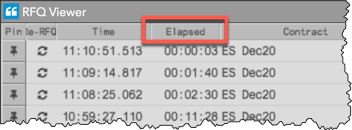
The quote request for cross message is broadcast to all market participants and is visible in the RFQ Viewer widget on TT. Once the cross trade is executed, you can view the fills and order status in the Order Book, Fills, and Audit Trail widgets.

Blocktrader display for CME R-Cross Trades

Blocktrader consists of the following fields for submitting R-Cross trades on CME.
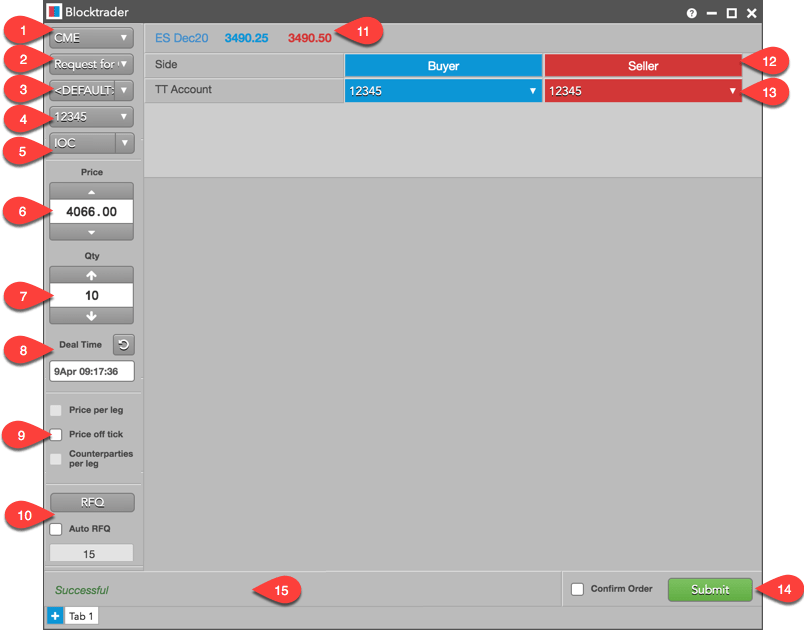
The widget includes:

  1. Exchange selector — Lists the exchanges with trade reporting supported on TT®
  2. Trade type selector — Lists the trade types supported for the selected exchange.
  3. Profile selector — Sets the order profile for routing the trade to the exchange.
  4. Account selector — Sets the account and connection used to route the trade to the exchange.
  5. TIF selector — Sets the TIF restriction on the order. Select either “Day” or “IOC”.
  6. Price — Used for entering a price for the transaction. You can also use the up and down arrows to set the price.
  7. Quantity — Used for entering the buy or sell quantity for the trade. You can also use the up and down arrows to set the quantity.
  8. Deal Time — Used for setting the time of the transaction.
  9. Price off tick — When checked, allows you to enter an off tick price per leg for instruments that support tick sizes smaller than what is displayed.
  10. RFQ — Sends a “Request for Quote Response” message for the cross trade to all market participants.

    Note: Ensure that you have selected an account for the specific exchange where you’ll be submitting the RFQ. Account selection for RFQs is set up in Preferences | Accounts.

  11. Auto RFQ — Sends a “Request for Quote Response” message for the cross trade, then automatically submits the trade after the set time interval is elapsed.

    Note: Ensure that you have selected an account for the specific exchange where you’ll be submitting the RFQ. Account selection for RFQs is set up in Preferences | Accounts.

  12. Instrument picker: Opens the Market explorer to search for or manually select an exchange, product, and instrument.
  13. Side — Sets the Buyer or Seller. Click the Buyer or Seller cell to set each side of the trade.
  14. TT Account — Sets the executing account number as agreed between the broker and clearing member firm. This account will be used for the Buyer or Seller instead of the account selected in the order panel. The accounts listed are assigned to your username in Setup.
  15. Confirm Order and Submit — Allows you to confirm the trade before it’s submitted. The Submit button sends the trade to the exchange. Order confirmations are enabled by default.
  16. Message indicator — Indicates if the trade was successfully sent to the exchange. Also shows if the order needs to be confirmed before submitting.

Submitting a CME R-Cross Trade on TT

Before submitting a cross trade, consider the following:

  • Ensure that wholesale trading is enabled for your account or username in Setup.
  • Contact the exchange to ensure that your products are eligible for RFQ.
  • If you plan to use Auto RFQ in Blocktrader to set your own time interval between RFQ and submitting the order (RFC), contact the exchange or refer to the exchange rules for the correct time interval for your product.

The following is an example of a cross trade configured and submitted in Blocktrader.
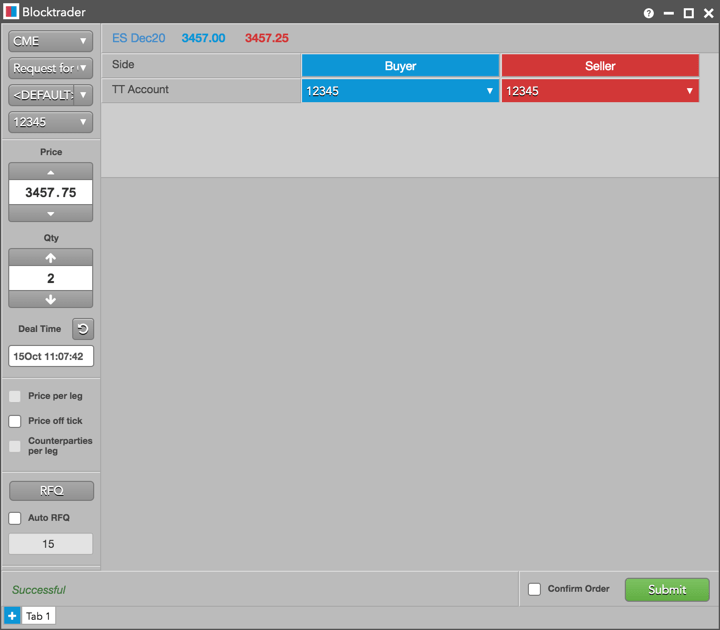
To submit a CME R-Cross Trade on TT:

  1. Click Widgets in the workspace title bar and select Miscellaneous | Blocktrader.
  2. Click the exchange selector in the Blocktrader widget and select “CME”.
  3. Click the trade type selector and select “Request for Cross”.
  4. Select a contract for each leg of the transaction using the instrument picker.
  5. Select an account for routing the transaction to the exchange.
  6. Set the Price and Quantity fields for the transaction.
  7. Set the transaction time for the trade.
  8. For instruments that support tick sizes smaller than what is displayed, you can check Price off tick to enter an off tick price for the trade.
  9. In the Side fields, click Buyer and Seller to determine the sides of the trade.
  10. Click TT Account and select the executing account number as agreed upon by the broker and clearing member firm.
  11. Click RFQ or click Auto RFQ and set a time interval.
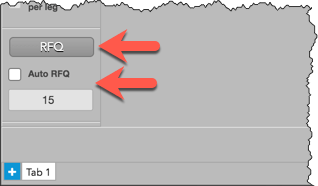
    Note: CME requires you to send an RFQ first, wait for 5 – 30 seconds depending on the product, and than send an RFC.

    Tip: The Elapsed column in the RFQ Viewer widget shows how long the RFQ has been submitted.
  12. Click Submit.

    Note: Blocktrader prompts you to confirm orders by default. Confirm the order and click “Submit”. Uncheck Confirm order on the Blocktrader widget to disable order confirmations.